
How To
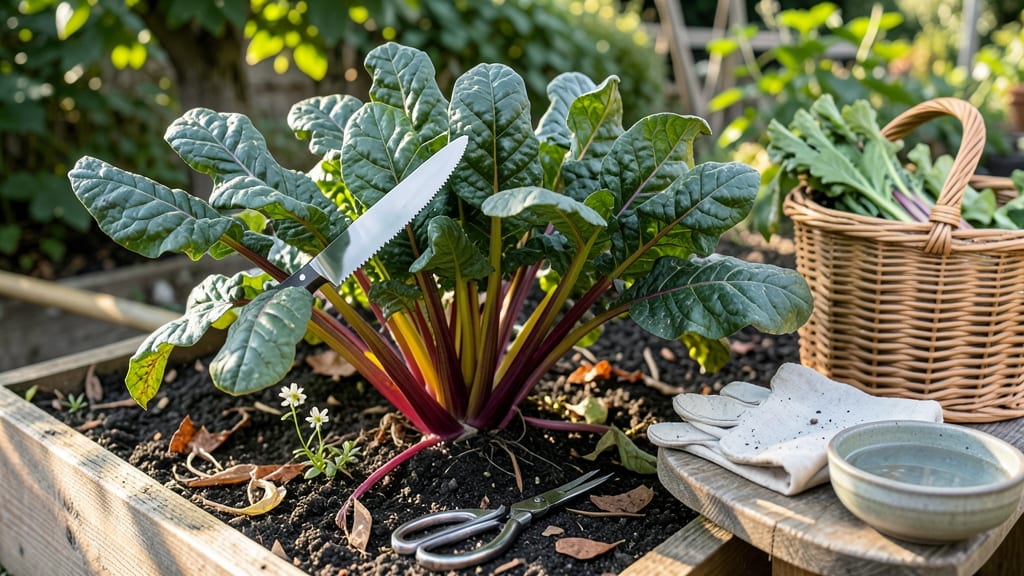
If you’ve ever watched your Swiss Chard 🥬 bolt to seed before giving you a single decent harvest—or struggled to figure out how to harvest chard so it keeps growing—you’re not alone, but there’s a simple fix.
The key to a never-ending supply of tender, flavorful leaves lies in harvesting the right way, not just whenever you feel like it.
Most gardeners make the mistake of cutting entire stems or waiting until the plant is overgrown, which actually stunts regrowth. Instead, you’ll learn how to trim just the outer leaves—leaving the inner growth intact—so your chard keeps producing fresh, crisp foliage for weeks.
This method works year-round in mild climates, but even in Zone 6a, it’ll extend your harvest well into fall.
I’ll walk you through the exact timing, cutting techniques, and post-harvest care to keep your Swiss Chard thriving. No more wasted effort or bitter-tasting leaves—just a steady, continuous yield that’ll make your kitchen the envy of the neighborhood.
Ready to transform your chard patch from a one-time harvest to a season-long feast? Let’s get started with the steps that’ll change how you grow this versatile green forever.
Proper stem-by-stem harvesting techniques for chard regrowth
Harvesting Swiss chard correctly is the key to unlocking a continuous harvest all season long. Unlike cut-and-come-again greens like lettuce, chard thrives when you use a stem-by-stem approach that preserves the plant's energy.
The goal? Remove outer leaves first while leaving the inner growth point intact so new leaves can emerge.
Start by selecting mature outer leaves that are 6-12 inches long and have reached their peak color. These leaves are ready for harvest and won’t hinder the plant’s ability to produce more.
Always use a sharp pair of pruning shears or a clean knife to make precise cuts—never tear leaves by hand, as this can damage the plant.
⚠️ CRITICAL RULE: Never cut more than 1/3 of the plant at once. This ensures the chard has enough leaf surface area for photosynthesis to fuel regrowth. Think of it like trimming your hair—you wouldn’t shave your head bald, would you? The same logic applies here!
When making your cut, angle the blade just above the base of the leaf, leaving a 1/4-inch stub. This small stub helps the plant seal the wound faster and reduces the risk of rot or disease.
Avoid cutting into the central growing point at all costs—this is the heart of your chard’s productivity.
Step-by-Step Chard Harvesting Guide
- Step 1: Wait until leaves reach 6-12 inches long and are vibrant in color.
- Step 2: Use sharp shears or a knife to cut outer leaves only.
- Step 3: Angle cuts just above the base, leaving a 1/4-inch stub.
- Step 4: Never remove more than 1/3 of the plant in one harvest.
- Step 5: Harvest in the morning for the freshest flavor and best texture.
- Step 6: After harvest, water deeply to restore moisture lost during cutting.
- Step 7: Apply a light mulch around the base to retain soil moisture and prevent weeds.
Pro Tip: Harvesting in the morning ensures leaves are crisp and hydrated, perfect for salads or sautéing! 🥬
Timing your harvests is just as important as how you cut. For spring and fall harvests, you can harvest every 7-10 days as long as the plant remains healthy. In summer’s peak heat, however, slow down to every 10-14 days to give the plant time to recover.
Over-harvesting in hot weather can stress the plant and lead to bolting (when it sends up a flower stalk prematurely).
One of the most common mistakes gardeners make is harvesting too aggressively early in the season. Young chard plants need time to establish a strong root system and leaf canopy before you start harvesting.
Wait until the plant has 6-8 mature leaves before you begin cutting—this usually takes about 4-6 weeks after transplanting.
After each harvest, give your chard a little post-harvest care to keep it thriving. Water the plant deeply at the base to replenish moisture lost during cutting. Follow up with a light application of compost or a balanced fertilizer (like 10-10-10) to replenish nutrients.
This two-step process ensures your chard has the energy and resources it needs to bounce back quickly.
If you’re growing chard in containers or pots, be extra mindful of harvesting frequency. Potted chard has limited root space, so it recovers more slowly than in-ground plants.
Reduce your harvest frequency to every 10-14 days and monitor the plant closely for signs of stress or nutrient deficiency, like yellowing leaves or stunted growth.
Finally, keep an eye out for seasonal adjustments. In late summer or early fall, chard often enters a phase of slower growth as daylight hours shorten.
This is normal! During this time, harvest even more sparingly—every 2-3 weeks—and focus on preserving the plant’s health for a potential winter harvest in mild climates.
With these stem-by-stem techniques, your chard plants will reward you with bountiful, continuous harvests all season long. The key is patience, precision, and post-harvest care—just like any great gardening practice! ✂️
How often to harvest chard for maximum continuous yield
Harvesting chard at the right frequency keeps your plants thriving while ensuring a steady supply of fresh leaves. Unlike cut-and-forget crops, chard rewards consistent attention—but timing matters just as much as technique.
I’ve found that harvesting every 2-3 weeks during peak growing season (spring to fall) strikes the perfect balance between yield and regrowth.
In spring and fall, when growth is slower, I extend the interval to every 3-4 weeks. This prevents over-stressing young plants while still encouraging new leaf production.
The key is to watch your chard’s growth rate—if leaves are still small after 3 weeks, wait another week before harvesting again.
During summer’s heat, I harvest more frequently—every 1-2 weeks—to prevent bolting (flowering) and maintain crisp texture. Chard struggles in extreme heat, so frequent harvesting actually helps by reducing stress.
Just remember: never take more than 1/3 of the plant in a single session, or you’ll stunt future growth.
- 🌱 Spring (Cool Weather): Every 3-4 weeks (slow growth phase)
- ☀️ Summer (Hot Weather): Every 1-2 weeks (prevent bolting, high stress)
- 🍂 Fall (Moderate Weather): Every 2-3 weeks (balanced regrowth)
- ❄️ Winter (Dormant): Skip harvesting (focus on protection)
Environmental factors also dictate timing. After heavy rain or if your chard looks wilting or yellowing, delay harvesting until the plant recovers. Similarly, if your soil is dry or compacted, prioritize watering and fertilization before resuming harvests.
I’ve learned the hard way that pushing a struggling plant leads to bitter leaves and poor regrowth.
For container-grown chard, harvest even more frequently—every 1-2 weeks—since potted plants have limited root space. Their smaller size means they recover faster, but they also deplete nutrients quicker. Pair frequent harvesting with weekly liquid fertilizer (like fish emulsion) to keep them productive.
Listen to your chard: if new leaves are small and slow-growing, you’re harvesting too often. If older leaves turn yellow or hollow, you’re waiting too long. The sweet spot is when your plant bounces back within 10-14 days with fresh, vibrant growth—signs of a happy, productive chard patch.