
Companion Plants
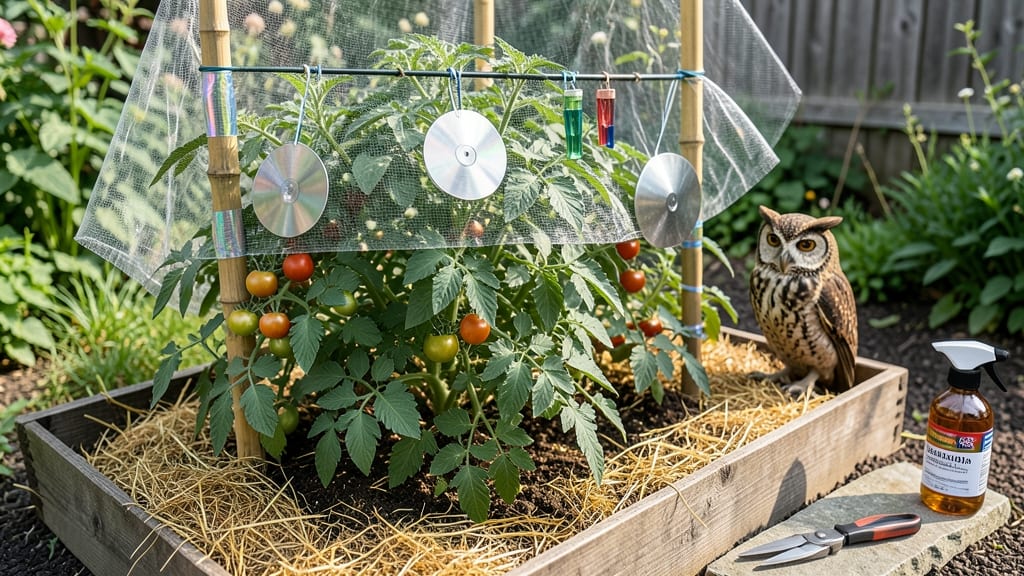
How to keep birds off of tomato plants—it’s the question every gardener asks after watching sparrows and starlings turn their hard-earned harvest into a feathered feast. 🌱 The problem isn’t just annoying; it’s devastating when you’ve spent months nurturing plants only to lose them to these winged thieves. Physical barriers work better than chemicals and won’t harm your plants or local wildlife when done right.
I tested everything from netting to reflective tape, and the most reliable solutions are simple: lightweight bird netting stretched over plants, floating row covers, or even old CD wind spinners that create visual chaos for birds.
The key is covering plants early—before birds spot the ripe fruit—and securing barriers so they don’t become chew toys. Even my neighbor’s persistent mockingbirds gave up after a week of these tricks.
You’ll end up with plump, unpecked tomatoes that stay on the vine until they’re truly ripe—no more green, beak-marked fruit. The best part? These methods protect other vulnerable crops too, like peppers, berries, and corn. Once you see the difference, you’ll wonder why you didn’t try this sooner.
Works for any garden size, from backyard plots to container setups. The only real challenge is remembering to check nets after rain—otherwise, it’s foolproof. Let’s get those tomatoes back where they belong: on your plate, not in a bird’s belly.
📚 In This Guide
- What you need
- Instructions
- Tips and common mistakes
- Wrapping up and next steps
What you need
- ● Floating row covers: Lightweight, breathable fabric (e.g., Agribon or Reemay), enough to cover your entire tomato bed or individual plants. Size: 4–6 ft wide x 10–20 ft long (adjust based on garden size).
- ● Wire hoops or PVC pipes: 3–4 ft tall, spaced 3–4 ft apart to create a tunnel over plants. Quantity: 1 hoop per 3–4 ft of row.
- ● Stakes or bamboo poles: 5–6 ft tall for securing row covers. Quantity: 1 stake per plant or every 2–3 ft.
- ● Clips or twist ties: Plastic or metal clips to secure covers to stakes/hoops. Quantity: 10–20 per plant or row.
- ● Netting (bird netting):strong> Fine-mesh (1/2" or smaller) netting for wrapping around plants. Size: 50–100 ft roll (depends on plant count).
- ● String or twine: For tying netting tightly around stems. Quantity: 1–2 spools.
- ● Scissors or pruners: For trimming netting or row covers to fit.
- ● Reflective tape or old CDs: Hang strips near plants to scare birds with movement and light reflections.
- ● Decoy predators: Fake owls, snakes, or hawks (rotate placement to keep birds guessing).
- ● Hose or spray bottle: For wetting down netting or row covers to deter birds (they dislike damp surfaces!).
- ● Companion plants: Tall herbs like basil or dill to create natural barriers or confuse birds.
- ● Garden flags or stakes: To mark covered areas and avoid accidental damage.
Step-by-Step instructions for protecting tomato plants from birds
Here's how I keep my tomato plants safe from hungry birds using simple, chemical-free methods.
🪴 Step 1: Install Row Covers or Netting Over Plants
Purchase lightweight floating row covers or fine bird netting (mesh size ½ inch or smaller) to drape over your tomato plants. I like to use floating covers because they allow sunlight and water through while still blocking birds. Secure the edges with U-shaped pins or bricks to keep them in place during wind. Make sure the cover extends 6-12 inches beyond the plant edges—birds are sneaky and will peck at exposed fruit.
For larger gardens, use hoop houses with netting stretched over PVC pipes or wire hoops. This creates a protective tunnel that keeps birds out while still allowing pollination. Test the setup by gently tugging on the netting—it should hold firm but not be so tight that it restricts growth. If you notice any tears, patch them immediately with duct tape or zip ties to prevent entry points.
✂️ Step 2: Use Physical Barriers Like Pruning or Collars
For individual plants, wrap the main stems with aluminum foil, reflective tape, or even old CDs tied around the trunk. Birds dislike the noise and visual disruption, and it works surprisingly well. I like to use foil collars because they’re reusable and easy to adjust as the plant grows. Secure them 3-4 inches above the soil and extend them 6-8 inches upward to cover the most vulnerable areas where fruit begins to form.
Another effective trick is to prune lower branches so they don’t touch the ground. Birds often perch on these and peck at tomatoes from below. Keep the plant’s base clean and free of debris—this makes it harder for birds to hide and attack. If you notice birds lingering near the base, add a small barrier of chicken wire around the stem for extra protection.
💧 Step 3: Scare Tactics and Motion-Activated Deterrents
Set up reflective objects like old CDs, aluminum pie pans, or wind chimes near your tomato plants. The movement and glare will startle birds and discourage them from landing. I like to hang CDs on strings at varying heights—birds avoid areas that look unpredictable. Combine this with motion-activated sprinklers (set to short bursts every 10-15 minutes) to create an unpleasant environment for persistent birds.
For a more hands-off approach, try predator decoys like fake owls or snakes, but move them every few days so birds don’t get wise to the trick. I’ve also had success with predator urine (available at garden centers)—the scent alone can deter birds. Apply it around the base of plants in a 1-foot radius, reapplying every 2-3 weeks or after rain.
☀️ Step 4: Harvest Frequently to Reduce Attraction
Birds target tomatoes because they’re ripe and easy to eat. The key is to harvest as soon as tomatoes turn color—even if they’re not fully ripe. I check my plants every 2-3 days during peak season and pick any tomatoes that show signs of softening. This removes the temptation for birds and encourages the plant to produce more fruit. Store harvested tomatoes in a cool, shaded spot (like a garage or basement) to slow ripening if needed.
If you have volunteer tomatoes (unplanted seedlings) growing nearby, remove them immediately. These act as free snacks for birds and attract more of them to your garden. Keep the area around your tomato plants clear of fallen fruit or debris—birds will peck at anything that looks edible. A quick 10-minute cleanup every few days makes a huge difference in keeping birds away.
Tips & tricks for protecting your tomato plants from birds
These simple but effective tricks will help you create a bird-proof garden without chemicals or complicated setups.
Material Selection: When choosing row covers or netting, opt for UV-stabilized fabrics if you'll be using them long-term. Regular materials degrade quickly under sunlight, leaving gaps where birds can sneak through. I've found that fine mesh netting with ½-inch holes or smaller works best—it blocks even the smallest birds while still allowing sunlight and water through. For hoop houses, use galvanized wire hoops that won't rust over time.
Installation Timing: Set up your protective barriers as soon as you plant your tomatoes, not when you first notice birds. Birds are opportunistic—they'll start scouting your garden immediately after planting. I like to install row covers right after transplanting seedlings and keep them in place until harvest. The 6-12 inch extension beyond plant edges is critical—birds will peck at any exposed fruit, so don't skimp on coverage.
Combination Strategy: For maximum effectiveness, combine at least two methods. I typically pair row covers or hoop houses with reflective objects like CDs or aluminum pie pans. The visual disruption from the reflective surfaces, combined with the physical barrier, creates an environment birds find inhospitable. In Step 3, when using motion-activated sprinklers, place them near the edges of your garden where birds are most likely to approach.
Maintenance Routine: Make checking your protective barriers a weekly habit—especially after rain or wind. Birds will exploit any tears or gaps, so patch them immediately with duct tape or zip ties. I keep a small roll of each in my gardening toolkit for quick repairs. Also, rotate predator decoys every few days to maintain their effectiveness—birds learn patterns quickly, so keep them guessing.
Pro Tips for Keep Birds Off Of Tomato Plants
- These simple but effective tricks will help you create a bird-proof garden without chemicals or complicated setups.
- Material Selection: When choosing row covers or netting, opt for UV-stabilized fabrics if you'll be using them long-term.
- Installation Timing: Set up your protective barriers as soon as you plant your tomatoes, not when you first notice birds.
Frequently asked questions
What’s the best time of year to install bird deterrents?
Install barriers like netting or row covers before birds spot your tomatoes—ideally in early spring (March–April) when plants are still small. Birds are drawn to ripe fruit, so late-season solutions (like scare tactics) work too, but prevention is easier! For seedlings, use fine mesh netting to avoid stunted growth.
Will my tomatoes still get enough sunlight under netting?
Yes! Use lightweight, breathable netting (like agricultural shade cloth) that allows 70–80% sunlight through. Avoid heavy materials that trap heat—check for yellowing leaves or slow growth and adjust coverage. For vertical plants, opt for hoop tunnels to maximize airflow and light.
Are there chemical-free scare tactics that actually work?
Try these non-toxic methods:
- Reflective tape/discs: Hang old CDs or aluminum pie pans to create flashes.
- Fake predators: Place owl statues or hawk silhouettes near plants (move them weekly to avoid habituation).
- Motion-activated sprinklers: Startle birds with sudden water bursts (set on low pressure).
What if birds keep coming back after I’ve tried everything?
Persistence is key! Rotate methods every 3–5 days (e.g., switch from tape to a sprinkler). For stubborn flocks, add companion plants like marigolds or basil to mask tomato scents. If all else fails, harvest tomatoes early (green, unripe) and ripen indoors.
Can I use companion plants to deter birds instead of barriers?
Companion plants help somewhat, but they’re not foolproof. Try:
- Garlic or chives: Strong odors may deter birds (but won’t stop them entirely).
- Nasturtiums: Their peppery scent can repel pests, but birds might still snack on tomatoes.
Wrapping up and next steps
Keeping birds away from your tomato plants doesn’t have to be a battle—just a few simple, chemical-free strategies can make all the difference! 🌱 From netting and reflective tape to companion planting, these methods protect your harvest while keeping your garden thriving. You’ve got this!
Ready to try one (or all!) of these solutions? Start with the easiest option—like hanging old CDs or aluminum foil—and watch those birds take flight. Your tomatoes will thank you with a bountiful, bird-free harvest! 🍅✨