
Aphids
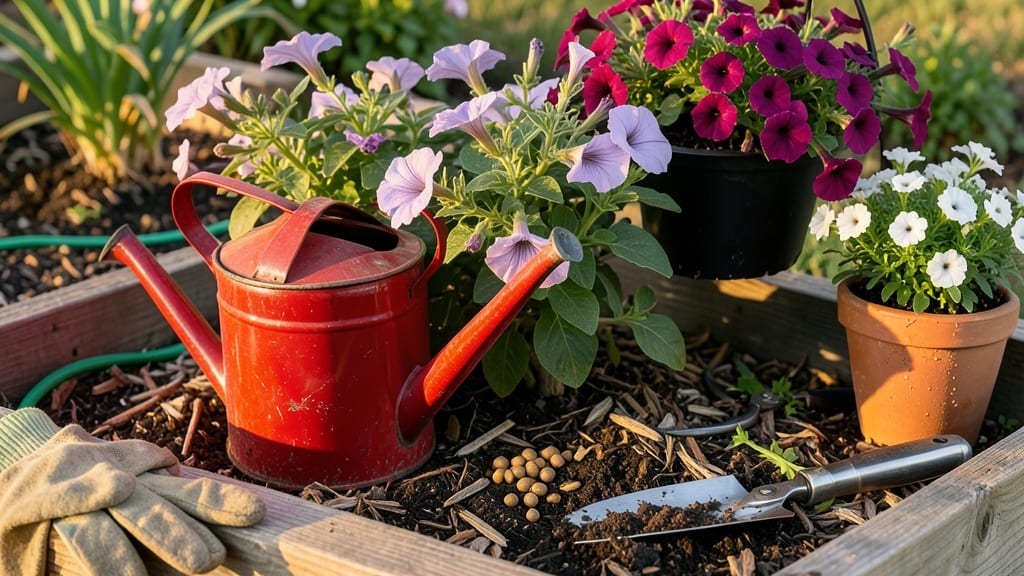
How to maintain petunias delivers explosive color all season long with surprisingly little effort. ✨ The trick isn't constant fussing—it's understanding their simple needs: consistent moisture, occasional deadheading, and a little fertilizer love. My first year with petunias ended in a sad, leggy mess, but now they're the showstoppers of my garden with minimal effort.
These flowers thrive when their roots stay moist but not soggy—water in the morning so leaves dry by evening. A balanced 10-10-10 fertilizer every 2-3 weeks keeps blooms coming, and pinching back leggy stems encourages bushier growth.
The key is watching for wilting or yellowing leaves early—those are the first signs of overwatering or nutrient needs.
By mid-summer, your petunias will be bursting with blooms if you stay ahead of deadheading spent flowers. The secret to winter survival (for perennial varieties) is cutting back stems and mulching—no fancy tricks, just protecting roots from freeze-thaw cycles.
Works for hanging baskets, window boxes, or garden beds—just adjust watering frequency for containers. Let's keep those blooms coming!
📚 In This Guide
- What you need
- Instructions
- Tips and common mistakes
- Wrapping up and next steps
What you need
- ● Petunia plants: Start with healthy seedlings or transplants (6-12 inches tall, depending on variety). Aim for 3-5 plants per 1 square foot for optimal airflow and blooms.
- ● Well-draining potting mix: Use a high-quality soilless blend (e.g., 60% peat moss, 30% perlite, 10% compost) to prevent root rot. 10-12 quarts per 4-inch pot or 1 cubic yard for in-ground planting.
- ● Containers (if potted): Opt for pots with drainage holes and a minimum 6-inch diameter for dwarf varieties or 12+ inches for trailing types. Terracotta or fiberglass materials work best.
- ● Balanced fertilizer: A 10-10-10 or 20-20-20 NPK ratio water-soluble fertilizer (e.g., Miracle-Gro). 1 tbsp per gallon of water for feeding.
- ● Pruning shears: Bypass pruners (sharp, clean, and sterilized with rubbing alcohol) to trim spent blooms and leggy stems.
- ○ Watering can or hose with a gentle nozzle: Avoid overhead watering to prevent fungal diseases. A drip irrigation system (optional but helpful) works wonders for consistency.
- ● Mulch: 1-2 inches of organic mulch (e.g., shredded bark or straw) to retain moisture and regulate soil temperature.
- ● Hand trowel: For gently loosening soil around roots during repotting or transplanting.
- ● Gloves: Protect your hands from prickly stems or soil-borne pathogens.
- ● Systemic insecticide (e.g., neem oil or pyrethrin-based): For aphid or spider mite outbreaks (common in petunias!).
- ● Garden stakes or cages: Support trailing varieties (e.g., Surfinia) with 4-6 foot tall stakes or lightweight cages.
- ● pH test kit: Ensure soil pH is 6.0-7.0 (petunias prefer slightly acidic to neutral soil).
Step-by-step instructions for maintaining petunias
Petunias reward minimal effort with bold blooms all season—here’s how to keep them thriving.
🌿 Step 1: Water Deeply at the Base
Petunias need consistent moisture but hate soggy roots. Water early in the morning when soil feels dry 1-2 inches down. Use a watering wand or soaker hose to deliver 1 inch of water weekly—more during 90°F+ heat. Avoid overhead watering to prevent fungal diseases like powdery mildew.
Check soil moisture by inserting your finger—if it feels dry past your first knuckle, it’s time to water. Mulch with 1-2 inches of organic mulch (like shredded bark) to retain moisture and suppress weeds. This keeps roots cool and reduces evaporation, especially in full sun conditions.
☀️ Step 2: Ensure Full Sun and Rotate Weekly
Petunias crave 6-8 hours of direct sun daily for continuous blooming. If leaves yellow or stems stretch (called "legginess"), your plants need more light. Place them where they’ll receive morning sun and afternoon shade if your climate exceeds 85°F.
Rotate pots or containers a quarter turn weekly so all sides get even sun exposure. You’ll notice stems growing straighter and blooms opening uniformly. In containers, ensure drainage holes are clear—root rot from waterlogged soil is the #1 killer of petunias.
✂️ Step 3: Prune Regularly for Bushier Growth
Pinch back the tips of new growth when plants are 6-8 inches tall to encourage branching. Use clean, sharp pruners to snip just above a leaf node (the bump where leaves attach). This prevents leggy stems and triggers more compact, bushier plants with double the blooms.
Deadhead spent flowers weekly by snipping the stem just above the next set of leaves. This redirects energy to new blooms instead of seed production. For trailing varieties, trim leggy stems to half their length when they exceed the pot’s edge—it forces them to fill out instead of sprawling.
🌱 Step 4: Fertilize Lightly and Seasonally
Feed petunias every 2-3 weeks with a balanced liquid fertilizer (10-10-10) diluted to half strength. Over-fertilizing leads to lush foliage but fewer flowers. Mix fertilizer into water and apply in the morning to avoid burning tender roots.
Switch to a low-phosphorus formula (5-10-5) in late summer to promote blooming over leaf growth. Stop fertilizing 6 weeks before first frost to allow plants to harden off naturally. For container-grown petunias, flush soil with plain water monthly to prevent salt buildup from fertilizers.
⏰ Step 5: Prepare for Winter or Overwintering
In frost-prone areas, cut back plants to 2-3 inches tall after the first hard frost. Mulch heavily with 4-6 inches of straw or leaves to insulate roots. Petunias are annuals in most climates, but in USDA Zones 9-11, they may regrow from the base in spring.
For container petunias, move pots to a cool, bright location (50-60°F) like a garage or shed. Water sparingly to keep soil barely moist. If leaves yellow or drop, reduce watering further—overwintering plants need minimal care until spring warmth signals new growth.
Tips & tricks for perfect petunia care
Took me years to figure out these petunia-growing secrets—here’s how to avoid the most common mistakes and keep your plants blooming like crazy.
Watering Wisdom: The 1-1.5 inches of water weekly is your target, but timing matters just as much. I’ve found that watering at the base with a soaker hose not only prevents fungal diseases but also ensures the roots get what they need without wasting water. Early morning is ideal because it gives leaves plenty of time to dry completely, which is crucial for preventing powdery mildew. If you’re using a watering can, pour slowly until water runs out the bottom—this ensures deep root hydration.
Deadheading Done Right: That 3-4 day deadheading schedule is non-negotiable for continuous blooms, but here’s what nobody tells you—use clean pruners and make cuts at a 45-degree angle just above a leaf node. This encourages new growth from that exact spot. For trailing varieties, I focus on removing only the topmost faded blooms to maintain that cascading effect while still promoting bushiness. And if your buds aren’t opening? That’s your plant’s way of saying it needs more light—move it to a sunnier spot immediately.
Light Exposure Hack: The 6-8 hours of full sun daily requirement is strict, but I’ve discovered a little trick: rotate your containers a quarter-turn weekly. This prevents your petunias from leaning toward the sun and growing lopsided. If you’re growing in containers, consider using self-watering pots—they help maintain consistent moisture levels while you’re away, which is especially helpful during those hot summer days when watering needs increase.
Fertilizing Fine-Tuning: That balanced 10-10-10 liquid fertilizer is perfect, but here’s my pro tip: always dilute it to half-strength for container-grown petunias. Salt buildup from concentrated fertilizer can actually harm your plants over time. And if you notice yellowing leaves, it’s not always over-fertilizing—sometimes it’s a sign of overwatering or poor drainage. Flush the soil with water first to rule that out before adjusting your fertilizer schedule.
Pro Tips for Maintain Petunias
- Took me years to figure out these petunia-growing secrets—here’s how to avoid the most common mistakes and keep your ...
- Watering Wisdom: The 1-1.5 inches of water weekly is your target, but timing matters just as much. I’ve found that wa...
- Deadheading Done Right: That 3-4 day deadheading schedule is non-negotiable for continuous blooms, but here’s what no...
Frequently asked questions
Got questions about keeping your petunias thriving? Here are some of the most common concerns—plus quick fixes to keep your blooms happy and healthy all season long!
How often should I water petunias?
Petunias need consistent moisture, especially in hot weather. Water them deeply 2–3 times per week (or daily during heatwaves) to keep soil evenly damp—about 1–2 inches deep. Pro tip: Water at the base in the morning to prevent fungal issues and encourage strong roots. Mulch helps retain moisture and reduces evaporation.
Do I need to deadhead petunias, and how?
Deadheading (removing spent blooms) isn’t mandatory but highly recommended for continuous flowering! Pinch or snip off faded flowers with clean shears or your fingers. When to do it: Early morning on dry days. Skip this step if you’re growing petunias for seed production (they’ll self-seed without deadheading).
What’s the best way to deal with aphids on petunias?
Aphids are a common pest, but don’t stress—they’re easy to manage! Try these steps:
- Spray infested areas with a soapy water solution (1 tsp mild dish soap + 1 quart water).
- Introduce ladybugs or lacewings (natural predators).
- Use neem oil as a preventive spray (follow label instructions).
- Prune heavily infested leaves and dispose of them far from your garden.
Can petunias survive winter, or should I replant every year?
Most petunias are annuals, meaning they’ll die back in frost. However, some perennial varieties (like Petunia axillaris) can return in mild climates. For year-round color:
- In cold zones, treat them as annuals and replant in spring.
- Overwinter tender petunias indoors in pots with bright light and minimal water.
- Take cuttings in late summer to propagate for next year!
Why are my petunia leaves turning yellow?
Yellow leaves usually signal overwatering, underwatering, or nutrient issues. Check these fixes:
Cause
Solution
Overwatering
Let soil dry slightly between waterings; improve drainage.
Underwatering
Water deeply and consistently; mulch to retain moisture.
Nutrient deficiency
Fertilize with a balanced liquid fertilizer (10-10-10) every 2–3 weeks.
Pests/disease
Inspect for aphids, spider mites, or fungal spots; treat accordingly.
Wrapping up and next steps
With just a little care, your petunias can burst into vibrant blooms all season long—and you’ve got the tools to make it happen! 🌸 From deadheading to pest control, these simple steps ensure your garden stays stunning with minimal effort.
Now’s the perfect time to roll up your sleeves and give your petunias the love they deserve.
Ready to transform your yard into a petunia paradise? Start by grabbing your shears and checking those plants—your future blooms will thank you! 🌿✨