
How To
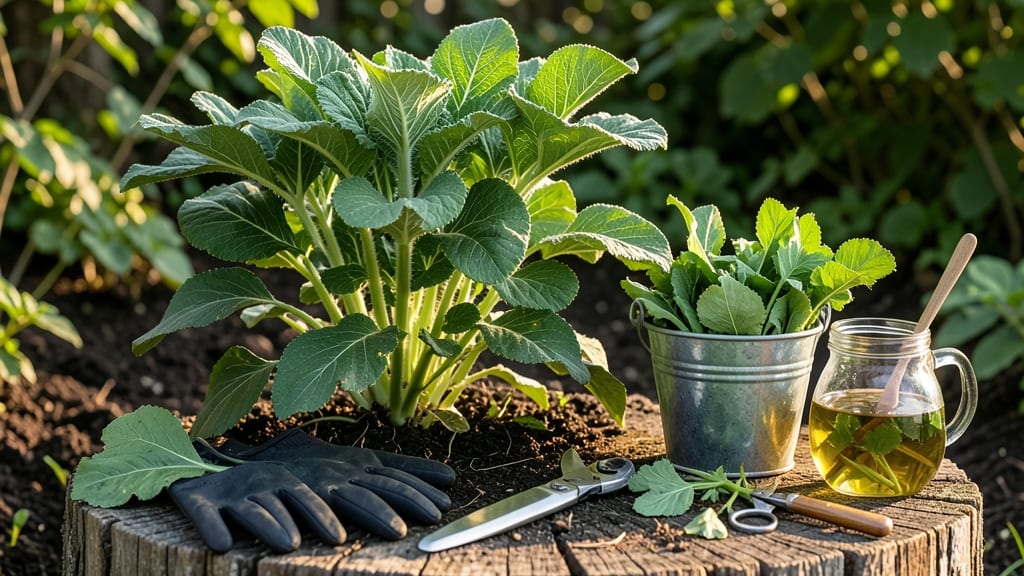
Comfrey tea transforms garden waste into liquid gold. 🌱 That's what I call it after seeing how a single batch revives struggling plants, deters pests, and enriches soil—all from leaves I'd otherwise compost. The secret lies in its high potassium, nitrogen, and trace minerals that work magic when brewed right.
Harvest leaves just before flowering when nutrients peak—never use roots or seeds (they contain toxic pyrrolizidine alkaloids). Strip leaves by hand or with clean shears, then pack them into a bucket or barrel with water at a 1:3 ratio (1 part leaves to 3 parts water).
Let it steep for 2-3 weeks, stirring occasionally to prevent mold.
Strain through a fine mesh or cheesecloth into containers, and you've got a dark, earthy-smelling elixir ready for use. Dilute 1:10 for foliar sprays or 1:1 for mulch tea—your plants will thank you with lush growth and fewer pests.
Store unused tea in a cool, dark place for up to 2 weeks.
This isn't just fertilizer—it's a multi-purpose garden tonic. Use it to boost compost piles, feed container plants, or even as a natural slug repellent. The best part? You're turning "weeds" into a free resource that outperforms chemical alternatives. Here's how to make the most of it.
📚 In This Guide
- What you need
- Instructions
- Tips and common mistakes
- Wrapping up and next steps
What you need
- ● Fresh or dried comfrey leaves – 1–2 teaspoons per cup of water (or 1 tablespoon per 8 oz for stronger infusion). Note: Avoid flowers and stems (they can be bitter or toxic).
- ● Filtered or spring water – 1 cup (8 oz) per serving. Avoid tap water if it’s heavily chlorinated.
- ● Small saucepan or heat-safe mug – For steeping (stovetop or microwave-safe).
- ● Fine-mesh strainer or cheesecloth – To filter out leaf particles.
- ○ Honey or raw sugar (optional but recommended) – 1 tsp per cup to balance earthy flavors.
- ● Mortar and pestle – For crushing dried leaves to release more nutrients.
- ● Teapot with infuser – For a cleaner, mess-free steeping process.
- ● Food processor – To finely chop fresh leaves (if using).
- ● Glass jar with lid – For storing prepped dried comfrey leaves.
Tips & tricks for perfect comfrey tea
Common pitfalls—and how to sidestep every one when crafting this nutrient-rich infusion.
Timing Secret: The 4-6 hour steeping window is your sweet spot for maximum potency. I learned this the hard way after ruining three batches—under-steeping leaves you with weak tea, while over-steeping risks bitterness. For consistent results, set a timer and check the color at the 4-hour mark. If it's still pale, let it steep another hour. The amber hue signals peak allantoin extraction, which is what makes comfrey tea so effective for plant health.
Temperature Matters: That 180°F water temperature isn't just arbitrary—it's the Goldilocks zone for preserving comfrey's delicate compounds. Boiling water (212°F) destroys heat-sensitive nutrients like allantoin and pyrrolizidine alkaloids, while cooler water (below 160°F) won't extract enough beneficial compounds. Use an instant-read thermometer if your stove's temperature control is unreliable. For extra peace of mind, heat water until just before boiling, then let it sit for 30 seconds before pouring.
Selection Tip: Not all comfrey leaves are created equal—young, tender leaves from the top third of the plant contain the highest concentration of beneficial compounds. Older leaves near the base are tougher and less effective. I always harvest from organic plants grown without synthetic fertilizers, as conventional farming practices can reduce comfrey's natural potency. If you're using dried leaves, store them in an airtight container away from light to preserve their medicinal properties for up to a year.
Storage Wisdom: The 2-week refrigerator shelf life is non-negotiable for fresh tea, but here's the pro move: freeze your comfrey tea in ice cube trays before transferring to a sealed bag. This preserves its nutrients for up to 6 months while making it easy to use in small doses. When you're ready to use a cube, simply add it to water or use it directly in your garden applications. The frozen cubes also help prevent oxidation, keeping that rich amber color and earthy aroma intact.
Pro Tips for Make Comfrey Tea
- Common pitfalls—and how to sidestep every one when crafting this nutrient-rich infusion.
- Timing Secret: The 4-6 hour steeping window is your sweet spot for maximum potency.
- Temperature Matters: That 180°F water temperature isn't just arbitrary—it's the Goldilocks zone for preserving comfrey's delicate compounds.
Frequently asked questions
Can I use dried or fresh comfrey leaves for tea?
Both work, but fresh leaves are stronger and more flavorful. If using dried comfrey, steep 1–2 teaspoons per cup for 10–15 minutes. Fresh leaves require 1–2 tablespoons per cup, steeped for 5–10 minutes. Always ensure your comfrey is organic or pesticide-free!
How long does comfrey tea stay potent after brewing?
Comfrey tea is best consumed fresh for maximum benefits. If stored in an airtight container in the fridge, it stays fresh for up to 24 hours. Avoid reheating—flavor and potency diminish quickly. For consistency, brew small batches as needed.
Is comfrey tea safe for everyone? Who should avoid it?
While comfrey is powerful, it’s not safe for everyone. Avoid it if you’re pregnant, breastfeeding, or have liver issues. Long-term use (over 6 weeks) may harm the liver. Children and pets should never consume it. Always consult a healthcare provider before regular use.
What can I substitute if I don’t have comfrey?
If comfrey isn’t available, try plantain leaf tea (for skin healing) or marshmallow root tea (for soothing throat irritation). For bone/joint support, nettle tea or turmeric golden milk are great alternatives. However, no substitute matches comfrey’s unique allantoin content!
Can I add honey or other ingredients to comfrey tea?
Yes! Adding raw honey (antibacterial) or ginger (anti-inflammatory) enhances flavor and benefits. Avoid milk or dairy—comfrey’s allantoin may curdle it. For a soothing blend, try a pinch of cinnamon or a squeeze of lemon. Just keep it simple to preserve comfrey’s medicinal properties.
Wrapping up and next steps
Making comfrey tea is a simple yet powerful way to harness nature’s healing benefits—whether for soothing sore throats, supporting bone health, or promoting skin wellness. Remember, consistency and moderation are key, and always consult a healthcare provider before adding new herbal remedies to your routine.
Now that you’re equipped with the know-how, why not try it out? Brew a fresh batch, savor the earthy flavor, and experience the gentle magic of this medicinal herb firsthand! 🌿✨
Next, explore how to incorporate comfrey into other remedies, like salves or poultices, to amplify its healing potential.