
Blooming
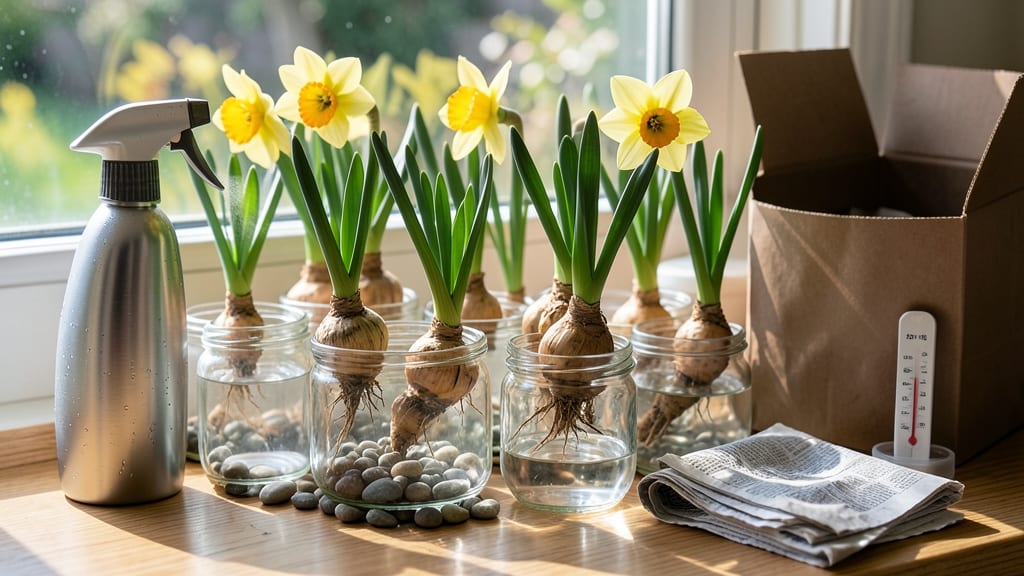
How to force daffodils indoors with boiling water unlocks winter blooms like sunshine on a gray day. 🌱 I’ve forced bulbs for Christmas gifts since my first awkward attempt—now I get bright blooms by December every year, and you can too. The secret’s in the timing: start with bulbs in late autumn, use the boiling water trick to jumpstart growth, then chill them for 10-12 weeks. You’ll need a few supplies—containers, potting mix, and a way to keep them cool—and the process takes patience, but the payoff is worth it. By Valentine’s Day, you’ll have stems tall enough to arrange in vases, their golden cups opening like sunshine in a gray winter. The trickiest part? Avoiding mold (more on that later) and keeping stems sturdy through forcing. This works for any daffodil variety, from classic trumpet types to tiny ‘Tête-à-Tête’—just adjust your timeline based on when you want blooms. Let’s get those bulbs blooming early!
📚 In This Guide
- What you need
- Instructions
- Tips and common mistakes
- Wrapping up and next steps
What you need
- ● Daffodil bulbs: 5–10 healthy, firm bulbs (choose from varieties like 'Tête-à-Tête' or 'Ice Follies' for best results).
- ● Water: 2–3 gallons of cold water (or enough to submerge bulbs halfway).
- ● Large pot or container: A shallow, wide vessel (10–12" diameter) with drainage holes (or a bucket with pebbles at the bottom).
- ● Pebbles or gravel: 1–2 cups (for drainage and stability).
- ● Newspaper or paper towels: To line the container and protect bulbs.
- ● Flower food packets: 1–2 (to extend vase life once bloomed).
- ● Decorative stones or moss: For a polished look in your forcing container.
- ○ Thermometer (optional): To monitor water temp (ideal: 40–50°F).
- ● Spray bottle: For lightly misting bulbs if your space is dry.
Step-by-step instructions for forcing daffodils indoors
Here’s how I bring winter’s chill into my home for early spring blooms—no greenhouse needed.
🪴 Step 1: Select and Prep Your Bulbs
Pick firm, plump daffodil bulbs from the grocery store or garden center. The larger the bulb, the bigger the bloom. I always choose paperwhite daffodils for forcing—they’re the most reliable for indoor blooming. Remove any dried or damaged outer layers with your fingers, but don’t peel the papery tunic completely off.
Place the bulbs in a shallow container—like a wide, low vase or even a pie dish—with the pointed ends facing up. If you’re using a glass vase, position them so the flat bases sit against the sides. This keeps them stable while allowing roots to grow downward. Don’t crowd them; leave 1-2 inches between each bulb so they don’t compete for space.
💧 Step 2: Shock the Bulbs with Boiling Water
This is the trick that kickstarts growth. Fill a kettle with water and bring it to a full boil. Pour the boiling water directly over the bulbs in their container until they’re completely submerged. Let them soak for 5-10 minutes—you’ll see steam rising as the heat penetrates. The goal is to simulate a natural winter thaw, waking the bulbs from dormancy.
After soaking, drain the water completely. Place the container in a cool, dark spot—like a closet or under the sink—where temperatures stay between 35-45°F. Keep the bulbs in this spot for 4-6 weeks. You won’t see much happening yet, but roots will start growing downward into the container. Check occasionally to ensure the bulbs aren’t drying out.
☀️ Step 3: Move to Light and Watch Them Bloom
When you see green shoots about 2 inches tall, it’s time to move the container to a bright spot. I place mine on a sunny windowsill or under a grow light for 12-14 hours of light daily. The shoots will grow rapidly now—water them gently whenever the top inch of the soil feels dry, but don’t let them sit in standing water.
Within 2-3 weeks after moving to light, you’ll see buds forming. This is the most exciting part! Keep the area consistently cool (60-65°F) to prolong the blooms. If your home runs warmer, move the container to a cooler room at night. The flowers should open fully in 7-10 days, filling your space with that fresh spring scent.
⏰ Step 4: Enjoy and Extend the Blooms
Once the daffodils bloom, they’ll last 1-2 weeks indoors if you keep them in a cool spot and change the water every 2-3 days. To extend their life, trim the stems at an angle and remove any faded blooms immediately. This encourages the plant to focus energy on the remaining flowers.
After the blooms fade, you can plant the bulbs outdoors in fall for next year’s garden. Or, if you want to try forcing again, let the foliage die back naturally, then store the bulbs in a dry, cool place until your next indoor blooming project. I’ve done this for years—each time, it’s like bringing a little piece of spring indoors before its time.
Tips & tricks for perfect forced daffodils
A few simple tricks will help you coax those cheerful blooms indoors without the guesswork.
Bulb Selection Matters: Look for bulbs that feel heavy for their size—they’re packed with energy for blooming. Smaller bulbs (about the size of a golf ball) will bloom faster, while larger ones produce bigger flowers. I always check for firmness—squishy spots mean they’re past their prime and won't force well. The paperwhite variety is my go-to because they're foolproof for beginners.
Container Choice: The container you choose affects both stability and drainage. Glass vases work beautifully because you can see root growth, but any shallow dish with drainage holes will do. I’ve used everything from pie dishes to repurposed food containers—just make sure the bulbs aren’t sitting in water after the initial soak. The key is keeping them stable while allowing roots to grow downward naturally.
Temperature Precision: Those 35-45°F cool, dark weeks are critical for root development. If your home stays warmer than 50°F, try placing the container in a garage or basement. I’ve even used a refrigerator set to its coldest setting (around 40°F) for perfect conditions. The goal is to mimic winter's chill without freezing—the bulbs need to be dormant but not damaged by cold.
Light Transition: When you move the bulbs to light at the 2-inch shoot stage, place them in the brightest spot you have. South-facing windows are ideal, but grow lights work too—just keep them 6-12 inches above the plants. I’ve noticed that fluorescent bulbs (especially cool white) work better than warm-toned ones. The sudden light shock triggers the final growth spurt that leads to buds.
Pro Tips for Force Daffodils
- A few simple tricks will help you coax those cheerful blooms indoors without the guesswork.
- Bulb Selection Matters: Look for bulbs that feel heavy for their size—they’re packed with energy for blooming.
- Container Choice: The container you choose affects both stability and drainage.
Frequently asked questions
Got questions about forcing daffodils to bloom early? You’re not alone—this trick sparks curiosity! Below, we’ve answered the most common questions to help you succeed without the guesswork.
Can I force daffodils from any store-bought bulb?
Not all bulbs respond well! Look for paperwhite daffodils (Narcissus papyraceus) or Jonquil varieties—they’re the easiest to force. Avoid hybrid daffodils (like Trumpet or Poeticus types), as they’re bred for garden growth, not forcing. Check the bulb packaging for “forcing-friendly” labels to save time.
How long does it take for forced daffodils to bloom?
With patience, you’ll see results! After the boiling water treatment, place bulbs in a cool, dark spot (like a fridge) for 8–12 weeks. Once buds form, move them to a bright, room-temperature area—blooms typically appear in 1–2 weeks. Rush the process? Avoid warmth too soon, or you’ll stunt growth.
Do I need to keep the water topped off during forcing?
Yes—but don’t overdo it! After boiling, fill the container with 1–2 inches of water and check it weekly. Refill only when the water level drops below the bulb’s base. Overwatering can rot the bulb, while too little water slows growth. A clear vase lets you monitor moisture easily.
What if my daffodils aren’t blooming by the expected time?
Don’t panic! Common culprits include:
- Temperature swings: Keep bulbs in a consistent 35–45°F (2–7°C) spot during the cold phase.
- Light exposure: Too much light too soon can trigger premature sprouting. Wait until buds form before moving to bright light.
- Old or weak bulbs: If bulbs are past their prime, they may not force well. Choose firm, plump bulbs for best results.
Can I reuse forced daffodil bulbs for next year?
Unfortunately, no—but you can still enjoy them! Forced bulbs expend energy blooming indoors, so they won’t regrow. For future forcing, plant the bulbs in your garden after they’re done blooming. With proper care, they may produce new offsets (baby bulbs) for next season’s forcing fun!
Wrapping up and next steps
Forcing daffodils to bloom early is a rewarding process that brings a burst of color to your home just in time for the holidays—or whenever you crave a little spring magic! 🌷 With the right materials, a few simple steps, and a dash of patience, you can coax these cheerful flowers into full bloom indoors.
Whether you’re a gardening novice or a seasoned green thumb, this method is easy, cost-effective, and incredibly satisfying.
Now that you’re armed with the know-how, why not try it today? Gather your daffodil bulbs, follow the boiling water trick, and watch as they transform your space into a sunny oasis. Share your blooms with loved ones—or even snap a photo for your garden journal! Happy forcing!