
Size
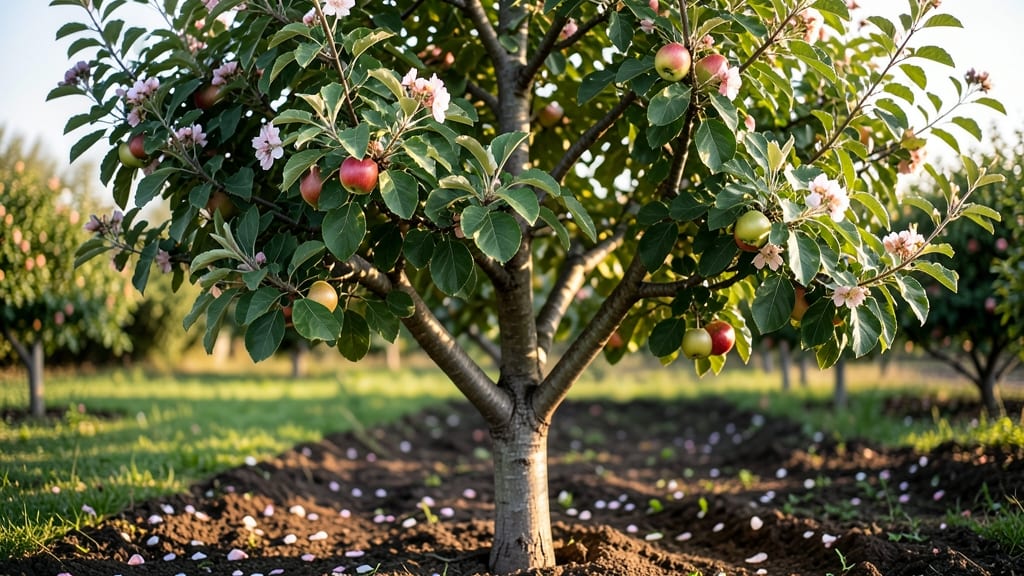
How to grow an apple plant from seed to fruit takes patience—but the first crisp bite makes it worth it. 🌱 I’ve grown apples in every stage of development, and the key to success starts long before you plant that first seedling. The right variety, soil, and sunlight can turn a backyard into a mini orchard, even in small spaces.
You’ll need cold-hardy varieties (like ‘Honeycrisp’ or ‘Granny Smith’), well-draining soil, and a sunny spot with at least 6-8 hours of light daily. Most people overlook soil prep—amending with compost and organic matter is non-negotiable.
Saplings need deep watering once a week, while seedlings prefer consistent moisture. Pruning in late winter shapes the tree for better airflow and fruit production.
By year three, you’ll see blossoms, and with proper care, apples by year five. The biggest challenge? Pest control—aphids and borers love young trees. Neem oil and beneficial insects keep them at bay without harsh chemicals. With the right approach, your tree could produce fruit for decades.
Works in zones 3-8, though southern growers should choose heat-tolerant varieties. The payoff? Homegrown apples taste nothing like store-bought, and the process is oddly satisfying. Let’s get those roots in the ground!
📚 In This Guide
- What you need
- Instructions
- Tips and common mistakes
- Wrapping up and next steps
What you need
- ● Apple tree seedlings or bare-root plants: Choose disease-resistant varieties like Honeycrisp, Fuji, or Granny Smith. Buy 1-3 plants, depending on your space.
- ● Well-draining soil: A mix of topsoil, compost, and perlite (or sand) for optimal drainage. You’ll need about 5-10 gallons per tree.
- ● Fertilizer: A balanced 10-10-10 NPK fertilizer (or organic options like composted manure) for planting and seasonal feeding.
- ● Mulch: Wood chips or straw (2-3 inches) to retain moisture and suppress weeds.
- ● Watering can or hose with a gentle spray nozzle: For deep, consistent watering.
- ● Pruning shears: Sharp, clean shears for shaping and maintaining your tree.
- ● Garden stakes or supports: 1-2 stakes per tree to secure young saplings.
- ● Tree ties or soft garden twine: To gently bind saplings to stakes.
- ○ Pest control (optional but helpful): Neem oil or insecticidal soap for early pest prevention.
- ● Drip irrigation system: For automated, efficient watering.
- ● Soil pH tester: To ensure your soil is slightly acidic (ideal pH: 6.0-6.5).
- ● Apple tree spray (organic or chemical): For fungal disease prevention (e.g., copper fungicide).
- ● Pollination aids: If growing self-pollinating varieties, a small brush can help transfer pollen between blossoms.
- ● Compost bin: To recycle kitchen scraps into nutrient-rich food for your tree.
Step-by-step instructions for growing apple plants at home
Here’s how to cultivate healthy apple trees that bear fruit year after year—even in small spaces.
🌱 Step 1: Choose the Right Variety and Planting Location
Select a dwarf or semi-dwarf apple variety suited to your climate, as these produce fruit faster and fit smaller gardens. Look for disease-resistant cultivars like ‘Liberty’ or ‘Enterprise,’ which thrive in most regions. Plant in full sun—at least 6-8 hours of direct sunlight daily—and choose a spot with well-draining soil and protection from strong winds.
Apple trees need cross-pollination to fruit, so plant at least two compatible varieties within 50 feet of each other. If space is limited, opt for self-pollinating varieties like ‘Honeycrisp’ or ‘Gala.’ Test soil pH before planting—aim for 6.0-7.0, adjusting with lime if needed. I always dig a hole twice as wide as the root ball to encourage root spread.
🪴 Step 2: Plant Bare-Root or Container-Grown Saplings Correctly
For bare-root saplings, soak roots in lukewarm water for 1-2 hours before planting to rehydrate them. Position the tree so the graft union (visible bump near the base) sits 2-3 inches above soil level—this prevents rot and ensures strong growth. Spread roots outward in the hole, then backfill with native soil, tamping gently to remove air pockets.
If using container-grown trees, remove the pot and loosen any circling roots. Plant at the same depth as it was in the container, as buried graft unions weaken the tree. Water deeply after planting to settle the soil and eliminate air gaps. Mulch around the base with 2-3 inches of organic mulch, keeping it 6 inches away from the trunk to prevent rot.
☀️ Step 3: Provide Consistent Care During the First Critical Years
Water newly planted trees deeply once a week for the first 2-3 months, ensuring moisture reaches 12-18 inches deep. Overwatering stresses roots, so check soil moisture by inserting a finger 2 inches down—water only when dry. Fertilize in early spring with a balanced 10-10-10 fertilizer, applying ½ cup per year of tree age (e.g., ½ cup for a 1-year-old tree).
Prune in late winter or early spring before buds swell, removing dead, crossing, or inward-growing branches. Thin out 10-20% of the canopy to improve air circulation and fruit production. I always sterilize pruning tools with rubbing alcohol between cuts to prevent disease spread. Avoid heavy pruning in the first year—focus on shaping the tree’s structure.
✂️ Step 4: Maintain Long-Term Health for Abundant Harvests
Thin fruit when they’re golf-ball-sized (about 6-8 weeks after blooming) to improve size and quality. Remove 1-2 fruits per cluster, leaving the healthiest ones. Apply dormant oil spray in late winter to control pests like aphids and mites, and monitor for apple scab or fire blight—common fungal diseases that thrive in wet conditions.
In late fall, apply a 3-4 inch layer of organic mulch around the base, replenishing it annually. This insulates roots in winter and retains moisture in summer. Harvest apples when they easily separate from the tree with a slight twist and have reached their peak color. Store ripe fruit in a cool, dark place (around 32-40°F) to extend freshness for months.
Tips & tricks for perfect apple plant growth
Took me years of trial and error to learn these game-changing strategies for thriving apple trees.
Sunlight Strategy: That 6-8 hours of daily sunlight is non-negotiable—apple trees are light-hungry! I've seen trees in partial shade produce tiny, poor-quality fruit. If your yard gets less than 6 hours, consider container growing near a south-facing wall. For best results, position trees so they receive morning sun and afternoon shade in hot climates, which prevents sunburn on fruit.
Root Health Secret: The 1-2 hour root soaking before planting isn't just about hydration—it's about waking up dormant roots. I always add a handful of mycorrhizal fungi to the planting hole to establish beneficial root relationships from day one. This single step can triple your tree's early growth rate. For container-grown trees, gently score the root ball with a knife before planting to encourage new root growth.
Watering Wisdom: Those first 2-3 months are critical—overwatering is the silent killer of young apple trees. I use a moisture meter to check soil at 2 inches deep before watering, and always water deeply rather than frequently. A soaker hose placed at the drip line (not the trunk) delivers water exactly where roots need it most. In summer, I water in the early morning to prevent fungal diseases that thrive in wet foliage.
Pruning Precision: When thinning that 10-20% of the canopy, focus on removing branches that cross or grow inward. I always make cuts just outside the branch collar (the swollen area where the branch meets the trunk) to promote faster healing. For young trees, I prioritize creating an open center that lets sunlight reach all branches—this prevents the dense growth that leads to disease. Sterilizing tools between cuts with rubbing alcohol is non-negotiable in my orchard.
Pro Tips for Grow Apple Plant
- Took me years of trial and error to learn these game-changing strategies for thriving apple trees.
- Sunlight Strategy: That 6-8 hours of daily sunlight is non-negotiable—apple trees are light-hungry!
- Root Health Secret: The 1-2 hour root soaking before planting isn't just about hydration—it's about waking up dormant roots.
Frequently asked questions
Got questions about growing your own apple tree? Here are some of the most common ones—plus straightforward answers to help you avoid pitfalls and grow like a pro!
How long does it take for an apple tree to bear fruit?
Most apple trees take 3 to 5 years to produce fruit after planting, depending on the variety. Dwarf trees (like ‘Honeycrisp’ or ‘Gala’) may fruit faster—sometimes in just 2 years. Patience is key, but proper care (like pruning and pollination) speeds things up!
Can I grow an apple tree in a pot?
Yes! Dwarf apple trees thrive in containers with at least 15–25 gallons of soil and good drainage. Use a large pot (18"+ diameter) and repot every 2–3 years. Place it in full sun (6+ hours/day) and choose self-pollinating varieties like ‘Liberty’ or ‘Anna’ for easier growing.
Why are my apple tree leaves turning yellow or curling?
Yellowing leaves often signal nutrient deficiency (like iron or nitrogen) or pests (aphids, mites). Curling could mean spider mites or viral infections. Check the undersides of leaves for pests, adjust fertilizer (use organic options), and prune affected branches. If unsure, test soil pH (ideal: 6.0–7.0).
Do I need two apple trees for pollination?
Most apple trees require cross-pollination from a different variety blooming at the same time. Plant two compatible trees (check labels for “pollination partners”) within 50 feet. Some self-pollinating varieties (like ‘Golden Delicious’) work alone, but yields may be smaller. Ask local nurseries for the best pairings!
How do I protect my apple tree in winter?
Young trees (under 3 years) need winter protection in cold climates. Wrap the trunk with tree guard or burlap to prevent rodent damage. Mulch the base with 3–4 inches of straw or wood chips to insulate roots. Avoid heavy snow buildup—gently brush it off branches to prevent breakage.
Pro Tip:
Need a quick fix? Try thinning fruit when apples are the size of a walnut—remove excess fruit to improve size/quality. Use sharp pruners and leave 6–8 inches between apples on the branch. Fewer (but bigger!) apples = happier tree!
Wrapping up and next steps
Growing your own apple plant is a rewarding journey that combines patience, care, and a little bit of magic! 🌱 From selecting the right variety to nurturing your tree through every season, you now have all the secrets to a thriving harvest.
Whether you’re dreaming of crisp homegrown apples or just love the joy of gardening, every step you take brings you closer to that sweet, satisfying payoff.
So, take a deep breath, roll up your sleeves, and get ready to plant that first seed—or sapling! Start small, stay consistent, and watch your garden transform into a fruitful paradise. Happy growing! 🍏✨