
Size
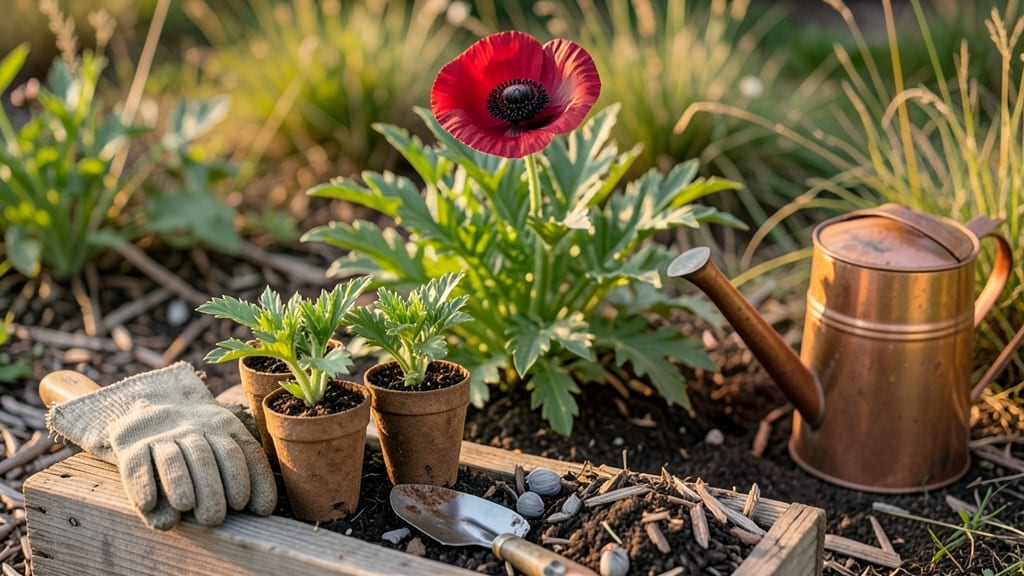
Those velvety, cup-shaped blooms make oriental poppies how to grow oriental poppies worth every minute of patience. 🌸 I’ve grown them for five years now, and the secret to their showstopper performance starts with one simple rule: don’t rush them.
These divas demand good soil, smart spacing, and a little winter rest—but the payoff is blooms that last weeks in vases and turn heads in the garden.
The real magic happens in well-draining soil mixed with compost, planted in full sun where they’ll bake all summer. Most gardeners overwater them (big mistake)—oriental poppies hate soggy roots. Once established, they’re shockingly drought-tolerant, but young plants need consistent moisture until roots take hold.
The floppy stems you’ve seen? That’s just their dramatic way of saying “support me”—stake them early, or they’ll sprawl like a diva mid-performance.
By mid-summer, you’ll be rewarded with bold, papery blooms in every color but blue, each one lasting 7-10 days on the plant (or twice as long in a vase). The secret to repeat blooms?
Let the foliage yellow after flowering—this triggers their natural dormancy cycle, and they’ll bounce back stronger next spring. Even better, they multiply underground, giving you free plants for years.
Perfect for cottage gardens, city patios, or cutting gardens—just give them 6+ hours of sun and space to sprawl (they’ll fill a spot in 2-3 seasons).
Here’s how to avoid the three mistakes that kill most first attempts: overwatering, poor soil, and skipping the staking. Let’s get those seeds in the ground!
📚 In This Guide
- What you need
- Instructions
- Tips and common mistakes
- Wrapping up and next steps
What you need
- ● Seeds: Oriental poppy seeds (ensure they’re fresh or stored properly for viability). Pro tip: 💡 Start with 3–5 seeds per pot if sowing indoors.
- ● Potting soil: Well-draining, loamy mix (e.g., 60% garden soil + 30% compost + 10% perlite/sand). 1–2 gallons per seedling is ideal.
- ● Containers (for starting indoors): 3–4 inch pots or seed trays with drainage holes. 1–2 seeds per pot prevents overcrowding.
- ● Outdoor planting site: Full sun (6+ hours/day) and well-drained soil (amend clay soil with organic matter).
- ● Fertilizer: Balanced, low-nitrogen fertilizer (e.g., 5-10-10) or compost tea for organic growth. Apply sparingly—poppies dislike over-fertilizing!
- ● Hand trowel or transplanting spade (for digging and moving seedlings).
- ● Watering can with a fine rose attachment (to avoid disturbing seeds).
- ● Garden gloves (poppy sap can irritate skin!).
- ● Pruners (for deadheading spent blooms and shaping plants).
- ○ Mulch (optional): Straw or wood chips (1–2 inches) to retain moisture and suppress weeds.
- ○ Stakes or cages (optional): For tall varieties (e.g., ‘Peach Blush’), use 6-inch stakes to support stems.
- ● Best planting time: Outdoors: Early spring (after last frost) or fall (for winter dormancy). Indoors: 8–10 weeks before last frost (e.g., late winter).
- ● Climate: Hardy to USDA Zones 3–8. Pro tip: 🌡️ If in a hot zone, provide afternoon shade to prevent bolting.
- ● Patience: Oriental poppies take 2–3 years to reach full maturity and bloom spectacularly!
Step-by-step instructions for growing oriental poppies
Here’s how I’ve learned to coax these dramatic blooms from finicky seeds—trust me, it’s worth every bit of patience.
🌱 Step 1: Start Seeds Indoors in Late Winter
Oriental poppies need a long growing season, so I begin seeds indoors 8-10 weeks before your last frost date. Use sterile seed-starting mix in small pots (2-3 inches deep) to prevent damping-off. Scatter seeds on the surface—don’t cover them, as they need light to germinate. Pop the pots into a humidity dome or seal them in a plastic bag to trap warmth.
Place them on a seedling heat mat set to 70-75°F—this is critical for germination, which can take 2-4 weeks. I check daily for condensation and mist lightly if the mix feels dry. Once seedlings appear, remove the dome immediately to prevent rot. You’ll see tiny, round cotyledons first—wait until first true leaves (the fern-like foliage) appear before handling them.
☀️ Step 2: Harden Off and Transplant Carefully
After 6-8 weeks indoors, seedlings are ready for the garden. Start hardening off by moving them outside for 1-2 hours daily, gradually increasing time over 10 days. Oriental poppies despise disturbance, so I transplant them directly into their final spot—they won’t tolerate being moved later. Dig holes twice as wide as the root ball but no deeper, and space plants 18-24 inches apart for their bold blooms to shine.
Poppies hate wet roots, so I always plant on a dry day and water only at the base. Mulch lightly with 2-3 inches of straw to retain moisture without smothering the crown. These plants thrive in full sun (6+ hours daily) and well-draining soil—amend heavy clay with compost or sand if needed. You’ll know they’re happy when new leaves emerge bright green and upright within a week.
✂️ Step 3: Maintain Minimal Care for Stunning Blooms
Here’s the secret: Do almost nothing. Oriental poppies resent overwatering—water only when the top 2 inches of soil feel dry, and always at the base. Fertilizer is a no-go; too much nitrogen produces lush foliage but few blooms. I side-dress with aged compost in early spring for a gentle nutrient boost, but that’s it.
Deadhead spent blooms only if you want more flowers—otherwise, leave them for seed pods to add texture. These plants go dormant in summer, so stop watering entirely once foliage yellows. In fall, cut back dead growth but leave the crown intact. New shoots will push through in spring, and you’ll be rewarded with showstopping blooms by early summer.
🌿 Step 4: Protect and Enjoy Year After Year
Oriental poppies are perennial in zones 3-8, but they’re slow to naturalize. To encourage spreading, I divide clumps every 3-4 years in early spring. Dig up the entire plant, separate the crowns, and replant immediately. These blooms are late to emerge in spring—don’t panic if growth is sluggish at first.
Watch for aphids or spider mites on new shoots; blast them off with water if spotted. Slugs love young leaves, so I use beer traps or copper barriers in early summer. Once established, these poppies are drought-tolerant and low-maintenance. With patience, you’ll have a garden centerpiece that draws admiring glances for decades.
Tips & tricks for growing oriental poppies
These little-known tricks will help you turn finicky poppy seeds into garden showstoppers—without the guesswork.
Germination Secret: Oriental poppy seeds need light to sprout, so resist the urge to bury them! Scatter them on top of your sterile seed-starting mix in those 2-3 inch pots. The seeds are tiny—think "dusting" rather than planting. I use a clean, dry paintbrush to distribute them evenly. This light requirement is non-negotiable; covering them will prevent germination entirely.
Heat Mat Hack: That 70-75°F heat mat temperature isn't just a suggestion—it's the magic number for breaking dormancy. I've tried warmer and cooler setups, and this range consistently produces the best germination rates. If you don't have a heat mat, place your pots on top of your fridge (not inside) for similar warmth. The key is maintaining consistent warmth day and night during those critical 2-4 weeks.
Transplant Timing: Those 6-8 weeks indoors might feel like forever, but it's crucial for establishing strong roots before garden shock. I can't stress enough how sensitive these plants are to disturbance—once they're ready for their final spot, handle them like they're made of glass. The 10-day hardening off period is your chance to acclimate them gradually to outdoor conditions, preventing transplant shock that could kill them.
Summer Dormancy Strategy: When your poppies go dormant in summer and foliage yellows, resist the urge to water. This is their natural survival mechanism! I actually mark the date when this happens and set a reminder to stop watering completely. The crown stays alive underground, and new shoots will emerge in spring. Think of it as their built-in survival mode—you're just helping them along by not interfering.
Pro Tips for Grow Oriental Poppies
- These little-known tricks will help you turn finicky poppy seeds into garden showstoppers—without the guesswork.
- Germination Secret: Oriental poppy seeds need light to sprout, so resist the urge to bury them! Scatter them on top o...
- Heat Mat Hack: That 70-75°F heat mat temperature isn't just a suggestion—it's the magic number for breaking dormancy....
Frequently asked questions
Got questions about growing oriental poppies?
You’re not alone! Here are answers to the most common queries—from timing to troubleshooting—to help your garden bloom with confidence.
When is the best time to plant oriental poppy seeds?
Plant seeds outdoors in early spring (as soon as soil is workable, around 40–50°F) or indoors 8–10 weeks before the last frost. These cool-loving beauties dislike heat—avoid planting in summer or when soil temps exceed 70°F. For zones 6–9, aim for March–April for direct sowing.
Why aren’t my oriental poppy seeds germinating?
Patience is key! Seeds need consistent moisture and cool temps (60–70°F) to sprout—usually 10–21 days. If they’re slow, check for:
- Dry soil: Keep lightly moist (not soggy) until germination.
- Depth: Seeds should be just barely covered (1/8 inch max).
- Light: Some seeds need sunlight to germinate—try a sunny windowsill.
Do oriental poppies come back every year?
Nope! These are tender perennials that treat annuals like them—they die after flowering (usually by early summer). However, they self-seed generously, so you’ll often get volunteer plants the next year. For guaranteed blooms, collect seeds from mature pods (when they turn papery brown) and replant in fall.
How do I protect oriental poppies from pests?
While generally pest-resistant, oriental poppies can attract:
- Slugs/snails: Handpick at night or use copper barriers.
- Aphids: Spray with soapy water or introduce ladybugs.
- Rust fungus: Improve airflow by spacing plants 12–18 inches apart and avoid overhead watering.
Can I grow oriental poppies in containers?
Use large pots (12+ inches deep) with well-draining soil and place in full sun. Choose dwarf varieties like ‘Peach Blush’ or ‘Black Cowboy’ for smaller spaces. Water containers less frequently—they dry out faster than garden beds. Just ensure pots have drainage holes to prevent root rot!
Wrapping up and next steps
Growing oriental poppies is a rewarding journey that brings bold, show-stopping blooms to your garden with just a little patience and care. Whether you’re drawn to their dramatic petals or low-maintenance charm, these flowers thrive with the right conditions—sunny spots, well-draining soil, and minimal fuss.
Now that you’re armed with tips on planting, spacing, and troubleshooting, it’s time to roll up your sleeves and watch your garden transform!
Ready to level up your floral game? Start by sketching a planting plan or browsing local nurseries for your favorite varieties. Happy gardening—your poppies are waiting to make their grand entrance! 🌸✨