
Size
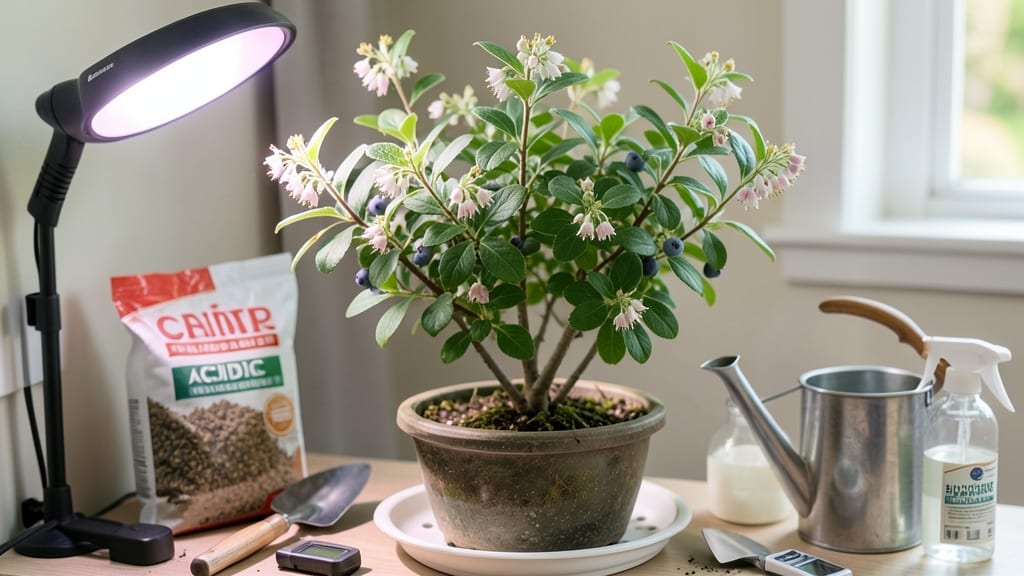
How to grow blueberries inside means summer flavor all year. 🌱 I've turned my kitchen windowsill into a blueberry patch, and the secret isn't complicated—it's about matching their needs to your space. These berries thrive in containers with the right soil acidity, light, and care, proving you don't need a yard for a harvest.
Start with a 5-gallon container or larger, acidic potting mix (pH 4.5-5.5), and a self-pollinating variety like 'Top Hat' or 'Peach Sorbet'. Place near a south-facing window or under a grow light for 12-16 hours of light daily.
Water when the top inch of soil feels dry—never let them sit in soggy soil, or roots will rot.
You'll see new growth within weeks, and with proper care, your plant can produce berries within 2-3 years. The first harvest might be small, but each season gets better.
Hand-pollinate with a soft brush if needed, and keep humidity up with a pebble tray—blueberries love it damp but not drenched.
This works for apartments, sunrooms, or even basements with proper lighting. The key is patience and consistency—your first indoor blueberry might take time, but the taste of homegrown berries in winter makes it worth every effort. Let's get those berries growing!
📚 In This Guide
- What you need
- Instructions
- Tips and common mistakes
- Wrapping up and next steps
What you need
- ● Blueberry plants: Choose dwarf varieties (like 'Top Hat' or 'Peach Sorbet') for containers. Buy 2-3 plants (for cross-pollination if possible).
- ● Containers: 5-gallon pots or larger (minimum 12" deep) with drainage holes. Use fabric grow bags or plastic pots with saucers.
- ● Soil: 1 part peat moss or coconut coir + 1 part perlite + 1 part acidic potting mix (pH 4.5-5.5). Avoid garden soil!
- ● Fertilizer: Acid-loving plant fertilizer (e.g., Miracle-Gro Azalea/Camellia) or granular sulfur to adjust pH.
- ● Watering tools: Spray bottle (for seedlings) + watering can with a rose attachment (to avoid disturbing soil).
- ● pH test kit: Digital or liquid test strips to monitor soil acidity (critical for blueberries!).
- ● Mulch: Pine bark or pine needles (to retain moisture and acidity).
- ○ Grow lights (optional but helpful): Full-spectrum LED lights (12-16 hrs/day) if natural light is <10 hrs/day.
- ● Humidity tray: A pebble tray with water to boost humidity (blueberries love it!).
- ● Self-watering system: A wicking bed kit or drip irrigation for consistency.
- ● Pollination aid: A soft paintbrush to hand-pollinate flowers if bees aren’t visiting.
- ● Support: Small stakes or tomato cages for bushier plants (as they grow).
- ● Compost: Worm castings for extra nutrients (mix 1 tbsp per pot).
Step-by-Step instructions for growing blueberries indoors
Here's the foolproof method I've used to keep blueberry bushes thriving year-round on my kitchen windowsill.
🪴 Step 1: Choose the Right Containers and Drainage
Blueberries need acidic soil and excellent drainage, so grab 5-gallon containers with drainage holes—plastic or ceramic both work. I like to add a layer of ½-inch gravel at the bottom of each pot first. This prevents soil compaction and keeps roots from sitting in water, which blueberries hate.
Make sure each container has at least 3 drainage holes spaced evenly around the bottom. If your pots don't have them, drill them yourself using a ¼-inch bit. The extra holes help prevent root rot, especially since blueberries prefer consistently moist—but never soggy—soil.
🌱 Step 2: Prepare Acidic Soil Mix
Blueberries demand acidic soil (pH 4.5-5.5), so skip regular potting mix. Instead, blend 50% peat moss with 50% perlite or coarse sand for drainage. I add a handful of sulfur powder to each 5-gallon container to maintain acidity—this is non-negotiable for healthy growth.
Fill each pot to 1 inch below the rim with your mix. Tap the sides gently to settle the soil, then water lightly until it's evenly moist but not dripping. The mix should hold its shape when squeezed but not stay clumpy—this ensures roots get both air and moisture.
☀️ Step 3: Plant and Position for Light
Dig a hole in each pot twice as wide as the root ball of your blueberry plant. Place the plant in, then backfill with soil, pressing gently to remove air pockets. Water again until moisture runs out the drainage holes—this settles everything in place.
Blueberries need 6-8 hours of bright, indirect light daily. A south-facing window works best, but supplement with a grow light if natural light is weak. Keep the light 12 inches above the plants and adjust as they grow. You'll know they're getting enough light when the leaves stay deep green—not pale or yellow.
💧 Step 4: Water and Fertilize for Acid-Loving Plants
Water when the top inch of soil feels dry, using rainwater or distilled water—tap water can alter soil pH. I water deeply until it runs out the drainage holes, then let excess drain away completely. Blueberries are sensitive to chlorine and minerals in tap water, so avoid it if possible.
Feed every 4-6 weeks with an acid-loving plant fertilizer (look for one labeled "for blueberries, azaleas, or rhododendrons"). I mix ½ teaspoon of fertilizer per gallon of water and apply it during watering. Over-fertilizing burns roots, so stick to the recommended dose.
✂️ Step 5: Prune and Maintain Year-Round
Prune in early spring by cutting back dead or crossing branches to encourage new growth. I also trim any leggy stems to keep the plant compact. Use clean, sharp pruning shears to avoid damaging the plant. Pruning stimulates fruit production, so don't skip this step—even indoors.
Watch for white flowers in spring, which signal fruit will follow. If your plant doesn't bloom, it may need more light or cooler temperatures (around 50-60°F at night). Blueberries are finicky, but with consistent care, you'll get berries within 2-3 years of planting.
Tips & tricks for growing blueberries indoors
These container-growing secrets will help you avoid common pitfalls and keep your blueberries thriving year-round.
Drainage is Non-Negotiable: The ½-inch gravel layer and 3 drainage holes in Step 1 aren't just recommendations—they're essential. I've seen blueberry roots rot within weeks when drainage was inadequate. After planting, place your pots on saucers to catch excess water, but always empty them after 10 minutes to prevent soggy soil.
Soil pH Test First: Before adding sulfur powder in Step 2, test your soil mix's pH using a kit from your garden center. Aim for 4.5-5.5—anything higher, and your blueberries won't absorb nutrients properly. I've had to adjust pH twice after mixing because store-bought peat moss sometimes varies. A pH below 4.0 can also harm roots, so check before planting.
Light Adjustment Hack: Those 6-8 hours of light in Step 3 are critical, but don't stress if your window isn't perfect. Place a mirror opposite your plant to reflect and amplify light. For winter months, supplement with a grow light on a timer for 12 hours daily—this mimics natural daylight cycles and prevents leggy growth. Move the light closer as your plant grows taller.
Watering Technique: The "top inch dry" rule in Step 4 works, but here's the pro move: Use your finger to check moisture at two different spots in the pot. Blueberries hate uneven moisture—some areas can dry while others stay soggy. Water until it runs out the drainage holes, then wait until the top 1-2 inches feel dry before watering again. This prevents both underwatering and overwatering.
Pro Tips for Grow Blueberries Inside
- These container-growing secrets will help you avoid common pitfalls and keep your blueberries thriving year-round.
- Drainage is Non-Negotiable: The ½-inch gravel layer and 3 drainage holes in Step 1 aren't just recommendations—they'r...
- Soil pH Test First: Before adding sulfur powder in Step 2, test your soil mix's pH using a kit from your garden cente...
Frequently asked questions
Got questions about growing blueberries indoors? You’re not alone! Here are answers to the most common concerns—from timing to troubleshooting—to help you crush your container garden goals.
What’s the best temperature range for indoor blueberry plants?
Blueberries thrive in 55–80°F (13–27°C) during the day and 45–55°F (7–13°C) at night. Avoid drafts near windows or AC vents, which can cause stress. If your home runs hot, use a small fan for airflow or move plants to a cooler room during heatwaves. Pro tip: Southern varieties (like ‘Duke’) handle warmth better than Northern types!
How long does it take for indoor blueberries to bear fruit?
Patience is key! Dwarf varieties may produce berries in 1–2 years, while standard plants can take 3–5 years. Focus on consistent care (light, water, soil pH) first—healthy plants fruit faster. If your plant isn’t blooming after 2 years, check for low light, poor pollination, or nutrient deficiencies (like lack of magnesium).
Why are my indoor blueberry leaves turning yellow?
Yellow leaves usually signal overwatering, nutrient issues, or pH problems. First, check the soil—it should be slightly moist but not soggy. Blueberries love acidic soil (pH 4.5–5.5), so test your mix and amend with peat moss or sulfur if needed. Yellowing on older leaves? It’s often nitrogen deficiency; try a balanced fertilizer like 10-10-10.
Can I grow blueberries indoors without sunlight? What’s the workaround?
Blueberries need 6–8 hours of bright light daily, but you can hack it! Use a grow light (LED or fluorescent) 12–16 inches above the plant for 14–16 hours/day. South-facing windows work best, but supplement with artificial light in low-light spaces. Rotate the pot weekly so growth stays even. No grow light? Try a sunny windowsill + reflective surfaces (like aluminum foil) to bounce light.
Do indoor blueberries need pollination? How do I help?
Yes! While some varieties are self-pollinating, indoor plants benefit from a little help. Gently shake the branches daily to move pollen, or use a soft paintbrush to transfer pollen between flowers. For better results, grow two plants (even in separate pots) to ensure cross-pollination. Bonus: Bees won’t visit indoors, so manual pollination is your best bet!
What’s the easiest indoor blueberry variety for beginners?
Start with dwarf or patio varieties like:
- ‘Top Hat’ – Compact, reliable, and cold-hardy (great for small spaces).
- ‘Peach Sorbet’ – Sweet, early producer, and disease-resistant.
- ‘Bluecrop’ – Classic choice with large berries (needs more light).
Look for “low-chill” varieties if you live in a warm climate—they need fewer cold hours to fruit. Nurseries often label them clearly!
Wrapping up and next steps
Growing blueberries indoors isn’t just possible—it’s a rewarding way to enjoy fresh, homegrown fruit anytime! With the right containers, soil, and a little care, you can turn your kitchen or balcony into a thriving blueberry haven.
Start small, stay patient, and soon you’ll be harvesting those juicy, antioxidant-packed berries year-round.
Ready to dive in? Pick your favorite blueberry variety, grab your supplies, and get planting! 🌱✨