
How To
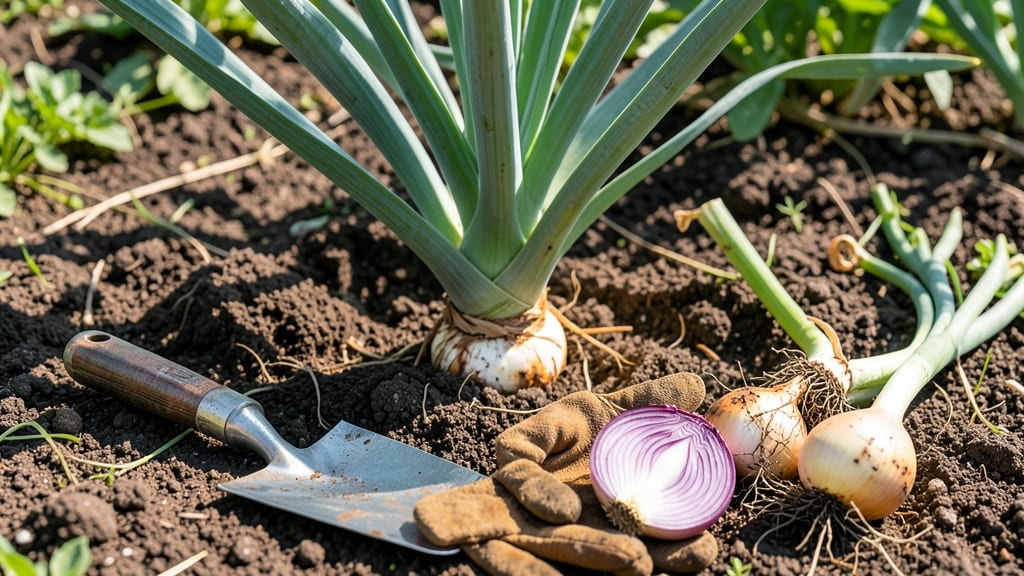
How to know when onions are ready to pick can mean the difference between a sweet, flavorful harvest and a bitter disappointment. Too early, and you'll end up with small, pungent bulbs that lack the rich taste you're after. Too late, and you risk rotting onions that never reach their full potential.
But here's the good news: with just a few simple visual cues, you can tell exactly when your onions are at their peak. I've grown onions in USDA Zone 6a for years, and these tricks have saved me from countless wasted harvests.
Whether you're growing storage onions or green onions, these signs will help you pick at the perfect moment—before the first frost hits in October.
First, watch for the tops turning yellow and drying out—a classic sign your onions are ready. Next, check the bulb size and feel: it should be firm and about the size of a tennis ball.
Finally, look for the neck of the onion shrinking and becoming papery. These three clues alone will transform your harvest from guesswork to confidence.
Ready to master the art of onion picking? Let's dive into the exact steps and signs you need to know, so you can enjoy homegrown onions at their best—every single time.
3 Visual cues to identify perfectly ripe onions (with photos)
Onions are ready to harvest when they show three key visual cues that signal peak ripeness. Ignoring these can lead to bitter flavors or rotten bulbs. The first clue is the leaf color change—when tops turn from vibrant green to straw-yellow and begin drying.
This indicates the plant is redirecting energy to the bulb, not the foliage.
Next, check the bulb size and shape. Mature onions should feel firm and round, about the size of a tennis ball. If they’re still small or irregular, they need more time.
The final visual cue is the neck drying: the stem connecting the bulb to the leaves will shrink and harden, making it easy to snap off with your fingers.
Here’s how these cues differ for green onions vs. storage onions. Green onions are ready when the white bulb is 1-2 inches thick and the tops are still green. Storage onions, however, need full leaf yellowing and a dry neck before harvest.
| Cue | Green Onions | Storage Onions |
|---|---|---|
| Leaf Color | Green | Straw-yellow |
| Bulb Size | 1-2 inches | Tennis ball size |
| Neck Condition | Thick and green | Dry and shriveled |
| Skin Texture | Smooth | Papery and dry |
Another trick is to gently pull back the soil around the base of the plant. If the bulb is fully exposed and the skin feels thick and dry, it’s ready. This method works best in loose, well-draining soil, where you can easily spot the bulb’s development without digging.
For long-day onions (like Yellowstone or Sweet Spanish), timing is critical. These varieties need 14+ hours of daylight to mature, so monitor the leaf yellowing closely in late summer. If you miss the window, bulbs may split or rot in the ground.
Pro tip: Harvest in the morning when temperatures are cool. This preserves the flavor and texture of the bulbs. Avoid harvesting after rain, as wet soil can encourage fungal growth on freshly picked onions.
If you’re unsure, test one bulb by cutting it open. A ripe onion has tight, dry layers with no green shoots in the center. If you see green sprouts, it’s past its prime and should’ve been harvested earlier.
Remember, storage onions need a dry, dark cure for 2-3 weeks after harvest to develop their full flavor. Skip this step, and you’ll miss out on that sweet, mellow taste we all love.
Now that you’ve mastered the visual cues, your next challenge is testing ripeness without digging—we’ll cover that in the next section! 🧅
How to test onion ripeness without digging (the gentle method)
Harvesting onions requires a gentle touch—digging too soon can leave you with bitter, underdeveloped bulbs, while waiting too long risks rot or sprouting. The good news?
You don’t always need to dig to check ripeness. Here’s how to test onions without disturbing the soil, using simple visual and tactile cues.
Start by examining the leaf color and neck thickness from above. Healthy, ripe onions show papery yellow tops that naturally flop over. If the leaves are still green and upright, the bulb isn’t ready—give it another 1-2 weeks of growth.
This method works for both storage onions and green onions, though green onions mature faster.
📌 Key Visual Cues to Check Without Digging: - Yellowing tops (not green) - Dry, papery leaf tips - Neck shrinking (the stem between bulb and leaves) - Exposed bulb base (if soil has receded)
For green onions, the process is simpler: harvest when the leaves reach 6-8 inches tall and the bulb is pencil-sized. Unlike storage onions, green onions don’t need to fully mature—their mild flavor peaks early. Snip them just above the soil line to encourage regrowth.
Timing is everything! If your onions are nearing maturity but you’re unsure, harvest a test bulb and cure it for 2-3 days in a dry, shady spot.
If it stores well, the rest are ready. Avoid harvesting after the first frost, as cold weather can turn bulbs sweet but mushy.
Now you can confidently harvest onions without digging, saving time and ensuring perfect ripeness every time. Happy harvesting! 🌱